
Can Stolen Bitcoin Be Recovered?
That is often the first question people ask after discovering they have been deceived.
Whether the loss involves Bitcoin, Ethereum, USDT, or another digital asset, the immediate reaction is usually disbelief. Victims frequently search for phrases such as recover bitcoin lost to scam, recover stolen bitcoin, recover crypto from scam, recover bitcoin investment scam, or recover USDT lost to scam, hoping there is still a path forward.
Recover Bitcoin Lost to a Scam: Three Stories That Reveal How Crypto Fraud Investigations Really Work
The answer is nuanced. Cryptocurrency transactions are generally irreversible, but that does not necessarily mean the trail disappears. Public blockchains permanently record transactions, and those records can be analyzed. A crypto fraud investigation, combined with blockchain investigation, crypto wallet tracing, and blockchain forensic investigation, may help identify where assets moved and support reporting to exchanges or law enforcement. The outcome depends on factors such as timing, the scammer’s methods, and whether identifiable custodial services become involved.
Unfortunately, many victims encounter a second wave of fraud: so-called recovery agents who promise guaranteed results for an upfront fee. Knowing the signs of a crypto recovery scam is just as important as understanding how to recover crypto from a scam through legitimate investigative and reporting channels.
This guide follows three fictional composite stories inspired by common scam patterns. They illustrate how cryptocurrency investigation, digital asset investigation, and blockchain analytics can help reconstruct what happened and support appropriate next steps.
Story One: Michael’s Investment Opportunity That Wasn’t
Michael had been investing cautiously for years.
He understood traditional markets and had recently become interested in digital assets. When someone contacted him through a professional networking platform about an exclusive investment program, the opportunity appeared credible. The website displayed live market charts, testimonials, and even customer support.
For several weeks everything looked legitimate.
His account balance increased daily.
The platform encouraged him to invest more Bitcoin.
He transferred additional funds.
Eventually, when he attempted to withdraw, the problems began.
Customer support demanded taxes.
Then insurance fees.
Then liquidity verification.
Each payment was requested in Bitcoin.
Soon afterward, the platform disappeared.
Michael had become the victim of a sophisticated bitcoin investment scam.
The Search for Bitcoin Scam Recovery
Like many victims, Michael immediately searched online for:
- bitcoin scam recovery
- cryptocurrency recovery
- crypto recovery services
- bitcoin recovery services
- recover bitcoin sent to scammer
- recover funds from crypto scam
- recover crypto investment losses
He quickly discovered that many websites promised guaranteed recovery within days.
Some even claimed they could reverse blockchain transactions.
Those promises were unrealistic.
Instead, Michael learned that reputable professionals typically begin with a Crypto Scam Investigation rather than making guarantees about outcomes. Their focus is on documenting facts, tracing transactions, and identifying whether assets reached locations where further reporting may be possible.
Beginning a Crypto Fraud Investigation
Rather than focusing on promises, the investigation began with evidence.
Michael gathered:
- wallet addresses
- transaction IDs
- exchange receipts
- emails
- chat logs
- screenshots
- investment agreements
- payment confirmations
Every detail mattered.
A structured crypto fraud investigation often starts by establishing a timeline before examining how funds moved across the blockchain.
The investigator performed:
- bitcoin transaction tracing
- crypto wallet investigation
- wallet address investigation
- blockchain transaction analysis
- crypto transaction investigation
- bitcoin wallet investigation
- crypto wallet forensic analysis
These steps help investigators understand the flow of digital assets rather than attempting to “reverse” blockchain transactions.
How Blockchain Investigation Works
Many people imagine blockchain as anonymous.
In reality, public blockchains are transparent.
Every transaction remains permanently recorded.
A blockchain investigation combines publicly available blockchain data with investigative techniques to identify transaction paths, clusters of related wallets, and potential interactions with exchanges or other identifiable services.
Depending on the circumstances, investigators may use blockchain analytics services and blockchain analytics tools to:
- map wallet relationships
- identify transaction clusters
- perform Wallet Tracing
- support Crypto Asset Tracing
- conduct digital asset tracing
- document suspicious fund movements
- prepare evidence for reporting
This process is commonly described as Blockchain Forensics or blockchain forensic investigation.
Following the Money
The Bitcoin did not simply disappear.
The investigation showed that Michael’s Bitcoin moved through several intermediary wallets before portions were consolidated into larger addresses.
The investigator continued to:
- trace stolen bitcoin
- perform blockchain wallet tracing
- conduct bitcoin transaction tracing
- review blockchain transaction analysis
The trail eventually indicated that some funds appeared to interact with a centralized exchange. That information did not guarantee recovery, but it helped create a detailed evidentiary record that could support reports to relevant platforms and authorities.
Why Timing Matters
One of the most important lessons from Michael’s experience was speed.
The sooner victims preserve evidence and seek legitimate investigative assistance, the more complete the transaction trail may be.
While no investigator can honestly promise cryptocurrency fraud recovery or crypto asset recovery, timely documentation and professional analysis can improve the quality of information available for reporting and follow-up.
Choosing Qualified Assistance
When evaluating a provider, victims often search for:
- hire crypto investigator
- cryptocurrency fraud investigator
- blockchain investigator
- crypto forensic expert
- digital forensic investigator
- crypto investigation company
- crypto investigation services
A credible provider should explain its methods, discuss realistic expectations, and avoid guaranteeing outcomes. Its role is to conduct a thorough investigation, document findings, and help clients prepare evidence for the appropriate reporting channels.
Story Two: Sarah’s Romance Scam That Became a Global Crypto Investigation
For nearly four months, Sarah believed she had found someone who genuinely cared about her.
They met through social media before moving their conversations to a messaging app. Their discussions ranged from careers and travel to family, gradually building trust. Nothing initially suggested she was speaking to a professional fraud ring.
One day, her new friend mentioned cryptocurrency investing.
He claimed to have an uncle who managed institutional investments and regularly earned impressive returns through a private platform.
At first, Sarah declined.
Eventually, after weeks of encouragement and seeing screenshots of what appeared to be successful trades, she deposited a small amount of Ethereum.
The investment dashboard showed immediate profits.
Encouraged by what looked like steady growth, she transferred more cryptocurrency over several weeks.
By the time she tried to withdraw, the website informed her that additional “verification fees” were required.
Then came taxes.
Then security deposits.
Then liquidity fees.
Only after sending multiple payments did she realize she had become the victim of a romance crypto scam, a tactic that often overlaps with pig butchering scams, where victims are encouraged to increase investments over time before losing access to their funds.
When a Scam Uses Multiple Platforms
Sarah’s experience involved several communication channels.
The initial contact happened on social media.
Investment discussions continued through a WhatsApp crypto scam conversation.
Later, another representative appeared through a Telegram crypto scam, claiming to be a senior account manager.
Using multiple platforms is a common social engineering tactic because it creates the illusion of a legitimate organization with different departments.
By the time Sarah searched for Pig Butchering Scam Help, she had already transferred both Ethereum and USDT.
Among her searches were:
- recover Ethereum from scam
- recover USDT lost to scam
- recover USDT
- recover crypto investment
- recover cryptocurrency from scam
- investment scam recovery
- crypto scam victim help
She also wondered whether anyone could recover crypto sent to wrong address, although in her case the transfers had been intentionally sent to scam-controlled wallets rather than an accidental address.
Building a Timeline
Every successful investigation begins with documentation.
Sarah assembled:
- wallet addresses
- transaction hashes
- screenshots
- exchange withdrawal records
- chat logs
- emails
- phone numbers
- payment confirmations
- fake investment statements
A complete timeline allowed investigators to reconstruct how the fraud unfolded before performing technical blockchain analysis.
Crypto Wallet Investigation
The investigation expanded beyond Sarah’s personal wallet.
Specialists began a detailed crypto wallet investigation to understand how assets moved after leaving her control.
This included:
- crypto wallet tracing
- wallet address investigation
- crypto wallet forensic analysis
- Wallet Tracing
- Crypto Asset Tracing
- digital asset tracing
Rather than looking only at one wallet, investigators examined the broader transaction network to identify connections between addresses.
Large criminal organizations frequently move assets through dozens or even hundreds of intermediary wallets in an attempt to complicate analysis.
USDT Tracing and Ethereum Analysis
Sarah had transferred both Ethereum and USDT.
Each asset required separate analysis because they existed on different blockchain networks.
Investigators performed:
- USDT tracing
- trace ethereum transaction
- blockchain transaction analysis
- crypto transaction investigation
Public blockchain records allowed them to follow movements from Sarah’s original transactions through multiple subsequent transfers.
While blockchain transactions generally cannot be reversed, tracing the movement of funds can help create a documented record of where assets traveled.
Blockchain Analytics in Practice
Modern Blockchain Analytics combines specialized software with investigative expertise.
A comprehensive blockchain forensic investigation may identify:
- transaction clusters
- repeated wallet patterns
- known exchange deposit addresses
- mixing services
- decentralized finance protocols
- cross-chain bridges
- high-risk wallet interactions
Professional blockchain analytics services are designed to organize complex blockchain data into evidence that may support reports to exchanges or authorities.
This process is one component of a broader Digital Asset Investigation.
Exchange Scam Investigation
One important discovery involved a custodial exchange.
Some of the traced assets appeared to move through a centralized service before being transferred elsewhere.
That finding did not mean the cryptocurrency would automatically be returned.
However, it provided valuable documentation that could support an Exchange Scam Investigation and reporting to the relevant platform.
Victims searching for:
- Coinbase scam recovery
- Binance scam recovery
- fake crypto exchange recovery
- crypto exchange fraud recovery
should understand that each platform has its own reporting procedures. Investigators can help organize blockchain evidence, but the platform itself determines how it responds based on its policies and applicable law.
Wallets Are Tools, Not the Cause
Sarah originally believed her wallet application had been hacked.
The investigation showed otherwise.
She had voluntarily approved transactions after being manipulated by scammers.
This distinction matters because victims often search for:
- Trust Wallet scam recovery
- MetaMask scam recovery
In many cases, the wallet software itself is functioning as intended; the scam relies on deception, fraudulent websites, or malicious smart contracts rather than a flaw in the wallet application.
Understanding exactly how the fraud occurred helps investigators identify the most relevant evidence.
Cryptocurrency Investigation Beyond the Blockchain
Blockchain analysis is only one part of the process.
A comprehensive Cryptocurrency Investigation also considers:
- domain registration records
- website infrastructure
- phishing techniques
- communication channels
- payment instructions
- exchange activity
- supporting documentation
This broader perspective helps investigators understand how the fraud operation functioned, not just where the cryptocurrency moved.
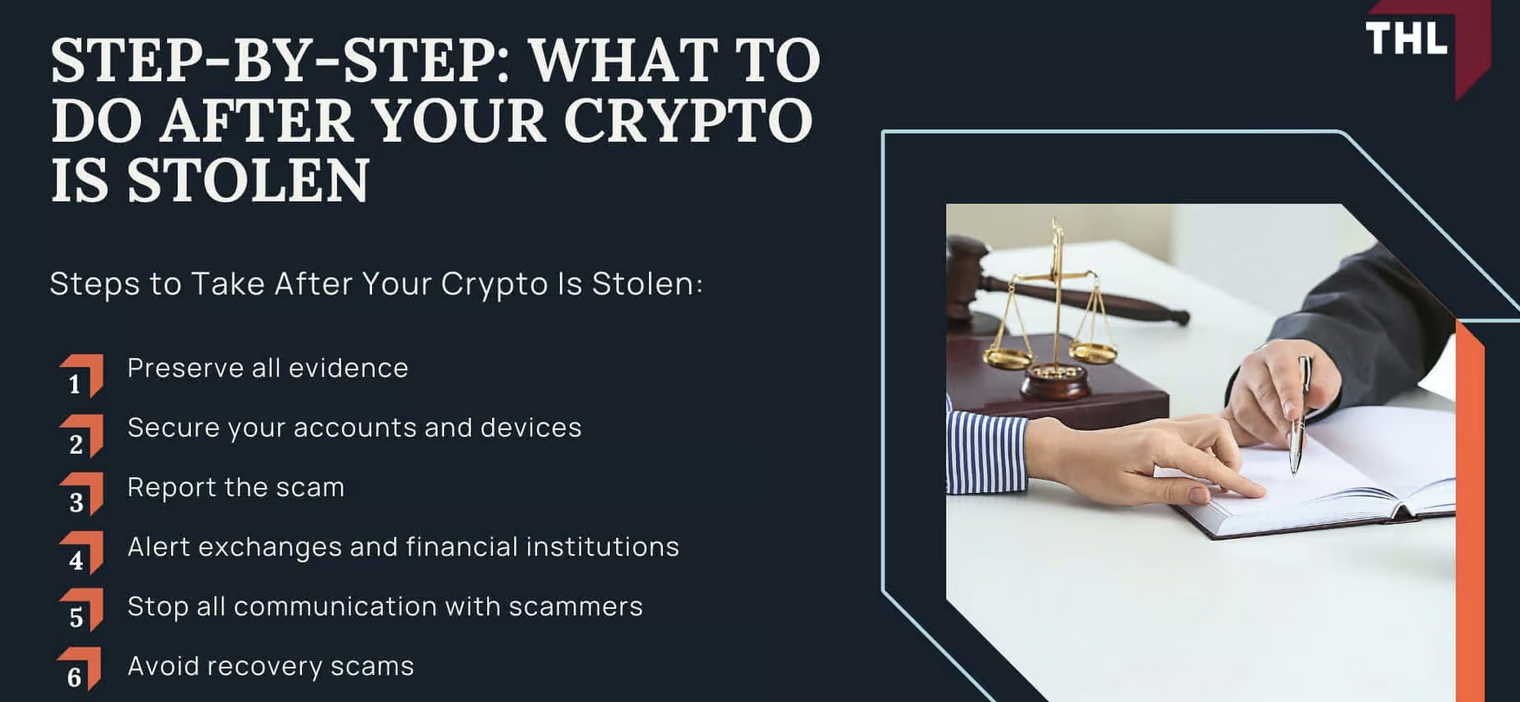
What Victims Should Do After a Crypto Scam
Sarah’s experience highlights several practical steps that can improve the quality of an investigation:
- Preserve wallet addresses and transaction IDs.
- Save emails, chats, screenshots, and payment confirmations.
- Avoid sending additional “unlock” or “tax” payments to the scammer.
- Report the incident to the exchange involved, if applicable.
- File reports with relevant law enforcement or cybercrime authorities in your jurisdiction.
- Consider engaging legitimate Crypto Fraud Investigation Services that explain their methods and do not promise guaranteed recovery.
Avoiding a Second Scam
Unfortunately, many victims receive unsolicited messages claiming someone can recover every lost coin within days.
Learning the Signs of a Crypto Recovery Scam is essential.
Warning signs include:
- guaranteed recovery promises
- demands for large upfront fees with unrealistic assurances
- claims of secret blockchain reversal technology
- pressure to act immediately
- refusal to explain investigative methods
- unverifiable credentials
A reputable crypto investigation company or blockchain investigator should clearly explain what an investigation can and cannot accomplish.
Their role is to analyze blockchain data, document findings, and support legitimate reporting—not to guarantee the return of digital assets.
Story Three: David’s Business Treasury, a Fake Exchange, and the Trail Across Multiple Blockchains
David owned a successful engineering company.
After years of accepting cryptocurrency payments from international clients, his business had accumulated a sizeable digital asset treasury consisting primarily of Bitcoin, Ethereum, and USDT.
Unlike many retail investors, David was experienced.
He understood wallet security.
He used hardware wallets.
He enabled multi-factor authentication.
He routinely verified wallet addresses.
Yet, despite all of those precautions, he still became the victim of an elaborate fraud.
A Sophisticated Fake Exchange
The incident began when David received what appeared to be an official email announcing that his preferred exchange was migrating institutional accounts to a new platform.
The domain name differed from the legitimate website by only one character branding looked authentic.
The domain name differed from the legitimate website by only one character.
Even the customer support chat appeared genuine.
Believing he was complying with a routine migration, David transferred part of his business treasury.
Hours later, the website disappeared.
His login credentials no longer worked.
The customer support account vanished.
David realized he had fallen victim to a fake crypto exchange recovery scenario.
His immediate searches included:
- recover stolen cryptocurrency
- recover stolen bitcoin
- recover bitcoin sent to scammer
- recover bitcoin lost to scam
- crypto exchange fraud recovery
- bitcoin theft investigation
- digital asset recovery
The First 24 Hours
Time is often one of the most important factors after a crypto scam.
Rather than attempting additional transactions or negotiating with the scammers, David focused on preserving evidence.
He collected:
- transaction hashes
- wallet addresses
- blockchain explorer links
- exchange emails
- screenshots
- invoices
- support tickets
- browser history
- DNS records
- login notifications
This documentation formed the foundation of a professional Crypto Scam Investigation.
Launching a Blockchain Forensic Investigation
A multidisciplinary team began a Blockchain Forensics engagement to reconstruct exactly what had happened.
The work included:
- blockchain forensic investigation
- crypto forensic investigation
- bitcoin transaction tracing
- crypto wallet tracing
- wallet address investigation
- crypto wallet forensic analysis
- digital asset tracing
- blockchain wallet tracing
- crypto transaction investigation
The objective was not to “reverse” blockchain transactions but to understand how funds moved and to create a well-documented evidentiary record.
Following Bitcoin Across Wallets
David’s Bitcoin moved quickly.
Within minutes, investigators observed multiple transfers through newly created wallets.
The pattern suggested an attempt to complicate tracking.
Using Blockchain Analytics and blockchain analytics services, investigators identified clusters of related wallet addresses and mapped the sequence of transfers.
This process—sometimes referred to as Wallet Tracing or Crypto Asset Tracing—helps investigators visualize how assets move through the blockchain ecosystem.
In David’s case, investigators were able to trace stolen bitcoin across several transactions before portions of the funds appeared to interact with services commonly used by large exchanges.
That information did not guarantee a return of funds, but it strengthened the evidence available for reporting.
Smart Contracts and DeFi
Not every scam relies on direct wallet transfers.
Some exploit decentralized finance applications or malicious smart contracts.
During David’s investigation, analysts discovered that one of the scam websites encouraged users to approve a smart contract with excessive permissions.
That finding expanded the investigation into a Smart Contract Scam Investigation.
Investigators reviewed:
- contract interactions
- token approvals
- permission scopes
- transaction logs
- on-chain events
These technical reviews are particularly important in incidents involving decentralized applications.
Victims often search for DeFi scam recovery after unknowingly authorizing malicious smart contracts.
While the blockchain permanently records these approvals, determining exactly how they were used requires careful technical analysis.
NFTs as a Distraction
One unexpected aspect of David’s case involved NFTs.
Shortly after the theft, his wallet received several unsolicited NFT tokens.
The investigation determined that these NFTs were unrelated to his stolen assets.
Instead, they appeared to be spam tokens designed to lure users into visiting malicious websites.
Because NFTs are sometimes used as part of broader fraud campaigns, investigators briefly conducted an NFT Scam Investigation before confirming that the unsolicited tokens were not connected to the original theft.
This illustrates why a thorough investigation considers all relevant blockchain activity rather than focusing on a single transaction.
When Businesses Need Cryptocurrency Investigation
Corporate victims often face additional challenges beyond the loss of digital assets.
They may need to:
- document financial losses
- preserve evidence for insurers
- comply with regulatory obligations
- notify stakeholders
- coordinate with legal counsel
- support internal audits
A comprehensive Cryptocurrency Investigation can help organize technical findings into a structured report that is easier for legal, compliance, or law enforcement teams to review.
Can Law Enforcement Recover Crypto?
A common question after any scam is:
Can law enforcement recover crypto?
There is no universal answer.
Law enforcement agencies in many jurisdictions have successfully seized cryptocurrency in some investigations, particularly when assets are identified on custodial platforms or when suspects are located and prosecuted. In other cases, assets are moved through multiple services or jurisdictions, making recovery much more difficult.
A professional investigation can support reporting by documenting wallet addresses, transaction flows, timestamps, and other technical evidence. Whether recovery ultimately occurs depends on the facts of the case and the actions of the relevant authorities and service providers.
How Long Do Crypto Investigations Take?
Another frequent question is:
How long do crypto investigations take?
The timeline varies depending on factors such as:
- the number of transactions
- the blockchain networks involved
- cross-chain transfers
- use of mixers or privacy tools
- availability of evidence
- cooperation from third parties
- jurisdictional considerations
Some technical tracing work can begin quickly, while more complex investigations may take considerably longer.
How to Report Crypto Fraud
If you believe you’ve been targeted by a cryptocurrency scam, consider taking these steps promptly:
- Stop sending additional funds to the suspected scammer.
- Preserve transaction IDs, wallet addresses, screenshots, and communications.
- Contact the exchange or service you used, if applicable.
- Change passwords and review the security of your accounts.
- File reports with the appropriate law enforcement or cybercrime agencies in your jurisdiction.
- Consider obtaining a professional blockchain investigation report to document the movement of funds.
Prompt reporting can improve the availability of evidence and may assist any subsequent investigation.
How Blockchain Investigations Work
Many readers ask:
How blockchain investigations work
A typical investigation may include:
- identifying the originating wallet
- mapping outbound transactions
- clustering related wallet addresses
- identifying interactions with exchanges or other services
- reviewing smart contract activity
- analyzing transaction timing and patterns
- documenting findings in a structured report
Because blockchain records are public on many networks, investigators can often reconstruct the path of assets even though the identities behind wallet addresses may not be immediately known.
Bringing the Three Stories Together
Michael, Sarah, and David encountered very different scams:
- an investment platform fraud,
- a romance-based social engineering scheme,
- and a sophisticated fake exchange targeting a business.
Yet every case shared the same starting point:
A careful crypto fraud investigation supported by blockchain investigation, Blockchain Forensics, Wallet Tracing, Crypto Asset Tracing, and Digital Asset Investigation.
Just as importantly, each story highlights that investigations focus on establishing facts, preserving evidence, and tracing transactions. They do not guarantee that cryptocurrency will be recovered, but they can provide valuable information for reporting to exchanges and law enforcement and for understanding exactly what happened.
Frequently Asked Questions About Crypto Fraud Investigation and Blockchain Asset Tracing
Can stolen Bitcoin be recovered?
This is one of the most common questions after a cryptocurrency scam.
Bitcoin transactions themselves are generally irreversible. However, that does not mean an investigation is pointless. A Bitcoin Scam Investigation can document transaction flows, identify wallet interactions, and determine whether funds moved through identifiable custodial services. Depending on the facts of the case and the actions of exchanges or law enforcement, investigative findings may support reporting and, in some situations, contribute to recovery efforts. No legitimate investigator can guarantee that stolen Bitcoin will be recovered.
How to recover crypto from a scam
If you’ve been targeted by a scam, acting promptly can improve the quality of available evidence.
Recommended steps include:
- Stop sending additional payments.
- Preserve wallet addresses and transaction IDs.
- Save screenshots, emails, chats, and receipts.
- Contact the exchange or wallet provider you used.
- Report the incident to the relevant authorities in your jurisdiction.
- Consider obtaining a professional Crypto Fraud Investigation to document blockchain activity.
The goal is to preserve evidence and establish a clear factual record.
What to do after a crypto scam
Immediately after discovering a scam:
- Secure your accounts and devices.
- Change passwords where appropriate.
- Enable multi-factor authentication.
- Document every transaction.
- Record wallet addresses.
- Save communication records.
- Report the incident promptly.
- Be cautious of unsolicited recovery offers.
Many victims unfortunately become targets of a second scam by people falsely claiming they can recover cryptocurrency for an upfront fee.
How to trace Bitcoin transactions
Bitcoin transactions are recorded on a public blockchain.
Investigators may perform:
- bitcoin transaction tracing
- Wallet Tracing
- Crypto Asset Tracing
- blockchain wallet tracing
- blockchain transaction analysis
- wallet address investigation
- crypto wallet investigation
These techniques help reconstruct the movement of digital assets across the blockchain and produce a structured report of the findings.
Can law enforcement recover crypto?
Law enforcement agencies around the world have successfully seized cryptocurrency in some investigations, particularly when assets were identified on custodial exchanges or linked to identifiable suspects.
However, outcomes vary significantly depending on:
- the nature of the fraud,
- the jurisdictions involved,
- how quickly the incident is reported,
- and whether the assets remain traceable.
A blockchain investigation can support official reporting by providing organized technical evidence.
How long do crypto investigations take?
Every investigation is different.
Simple transaction tracing may be completed relatively quickly, while complex cases involving multiple blockchains, decentralized protocols, cross-chain bridges, or international actors can take substantially longer.
The timeline depends on:
- number of transactions,
- blockchain networks involved,
- availability of evidence,
- cooperation from third parties,
- and investigative complexity.
How to avoid crypto recovery scams
If someone contacts you unexpectedly claiming they can recover every coin you lost, treat that as a warning sign.
Common red flags include:
- guaranteed recovery promises,
- requests for large upfront payments,
- claims that blockchain transactions can simply be reversed,
- pressure to act immediately,
- unverifiable credentials,
- refusal to explain investigative methods.
Choose professionals who set realistic expectations, explain their process, and focus on evidence rather than guarantees.
Choosing a Crypto Investigation Company
If you are considering professional assistance, ask questions such as:
- What experience do you have with blockchain investigations?
- How do you conduct wallet tracing?
- What evidence will I receive?
- Do you provide a written investigation report?
- How do you protect client information?
- Do you guarantee recovery?
A trustworthy crypto investigation company should clearly state that investigations document and analyze blockchain activity; they should not promise guaranteed recovery.
What Professional Blockchain Investigations Typically Include
Depending on the circumstances, Crypto Fraud Investigation Services may involve:
- Bitcoin Scam Investigation
- Cryptocurrency Investigation
- Blockchain Investigation
- Blockchain Forensics
- Crypto Asset Tracing
- Wallet Tracing Services
- Digital Asset Investigation
- Bitcoin Transaction Tracing
- USDT Tracing
- Ethereum Transaction Analysis
- Crypto Wallet Investigation
- Blockchain Transaction Analysis
- Crypto Wallet Forensic Analysis
- Exchange Scam Investigation
- Investment Scam Investigation
- Smart Contract Scam Investigation
- NFT Scam Investigation
- Documentation that may assist in reporting to exchanges or authorities.
The exact scope should depend on the facts of the individual case.
Key Lessons from the Three Stories
Although Michael, Sarah, and David experienced different types of fraud, several common themes emerged:
- Scammers often spend weeks or months building trust.
- Fraud can involve investment platforms, romance scams, fake exchanges, malicious smart contracts, or other social engineering techniques.
- Public blockchain records provide investigators with valuable transaction data.
- Thorough documentation is essential.
- Prompt reporting can preserve evidence.
- No ethical investigator can promise successful recovery in every case.
Understanding these principles can help victims make informed decisions after a scam and reduce the risk of becoming victims of follow-up recovery fraud.
Conclusion
Losing cryptocurrency to fraud can be financially and emotionally devastating. While blockchain transactions are generally irreversible, they are also transparent, creating a permanent record that investigators can analyze.
A professional Crypto Fraud Investigation combines blockchain analysis, transaction tracing, wallet analysis, and evidence documentation to help victims understand what happened and prepare accurate reports for exchanges, law enforcement, or legal counsel. Although investigations do not guarantee that digital assets will be returned, they can provide clarity, identify transaction paths, and support the next steps in the reporting process.
If you believe you’ve been affected by a cryptocurrency scam, preserve your evidence as soon as possible, avoid anyone who promises guaranteed recovery, and seek assistance from professionals who explain their methods, set realistic expectations, and base their work on careful investigation rather than unrealistic assurances.